 Clear at Work
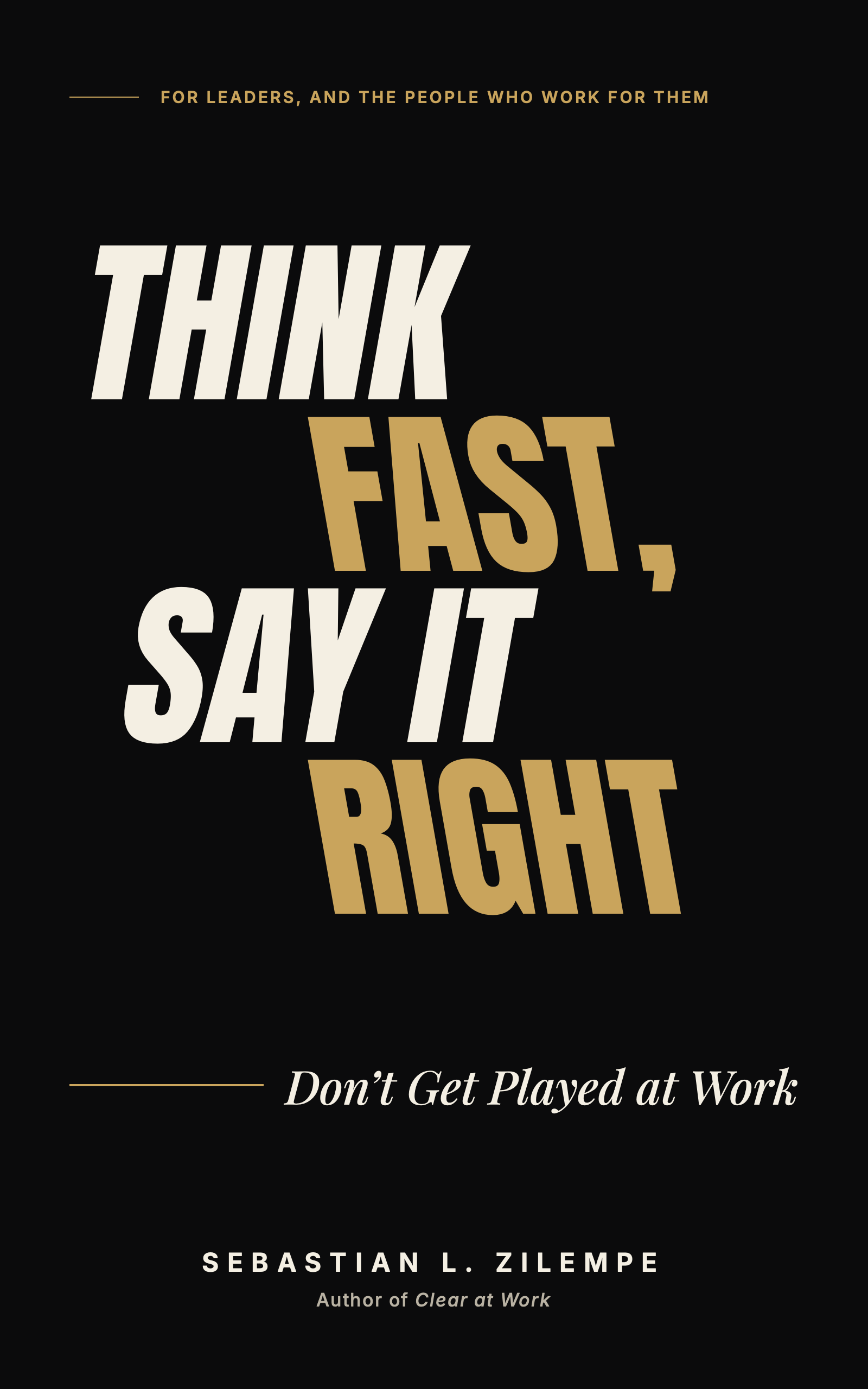
Free ebook · by Sebastian L. Zilempe
Think Fast, Say It Right
Don’t Get Played at Work
People use your own mind against you at work, often without you noticing: flattery right before a request, a deadline you didn’t set, guilt, pressure in front of the room. This book shows you how to see those moves coming, think ten moves ahead, and say the right thing under pressure, from either side of the desk.
Two halves, one table
Half One
For managers and executives
You hold authority, so you’re the one people work on. Spot the moves, stop the self-inflicted mistakes, and handle blame, bad news, departures, and price pressure.
The Bridge
One conversation, both sides
A raise request with an outside offer, told from the manager’s chair, then the employee’s, then replayed with both thinking ahead.
Half Two
For front-line employees
You have less power and more to lose. Protect yourself, earn trust, ask for a raise, say no, keep your credit, and push back without paying for it.
Start where you sit
You don’t have to read it front to back. Pick your chair and start with these three chapters.
I manage people
Start with Half One
For managers, owners and executives who get worked on from below and from the side.
- Ch. 1 · The Moves People Make on LeadersFlattery, false urgency, guilt and playing dumb, and what to say to each.
- Ch. 2 · Put on the SpotThe four-step answer for the ambush in front of the room.
- Ch. 14 · Buying Time Without Looking WeakHow to slow a decision down and still look in control.
I report to someone
Start with Half Two
For front-line employees who want to protect themselves and still be the person everyone trusts.
- Ch. 17 · The Moves Managers Make, On Purpose or NotPraise as a down payment, “we’re a family,” the ten-minute deadline.
- Ch. 26 · Saying No to Extra WorkFive kinds of no that keep you on good terms.
- Ch. 25 · Asking for a Raise or PromotionWhat to prepare, what to say, and what to do if the answer is no.
Free chapter · read it here
One conversation, both sides of the table
Maya wants a raise and has a recruiter’s number in her pocket. Tom can’t afford to lose her. Watch the same 15 minutes from his chair, then hers, then again with both of them thinking ahead. In almost every tough conversation, both people believe they’re the one being played.
What’s inside
Half One · For managers and executives
- The Moves People Make on Leaders
- Put on the Spot
- How Leaders Hurt Themselves
- Every Conversation Is a Sale
- What Everyone in the Room Really Wants
- Predicting the Reaction Before You Speak
- What-If Mapping Before a Hard Conversation
- When You’re Blamed for a Result
- Delivering Bad News to Your Team or the Board
- When a Top Performer Threatens to Leave
- When the Goal Changes on You from Above
- When Someone Tests Your Authority
- When a Client or Partner Pushes on Price
- Buying Time Without Looking Weak
- Building Your Pattern Library
- Daily Drills to Train Your Speed
Half Two · For front-line employees
- The Moves Managers Make, On Purpose or Not
- Called Out in Front of Coworkers
- How You Hurt Yourself
- Every Conversation with Your Boss Is a Sale
- What Your Manager Really Needs from You
- Reading the Room Above Your Manager
- What-If Mapping Before You Ask for Something
- When You’re Blamed for Something You Didn’t Do
- Asking for a Raise or Promotion
- Saying No to Extra Work
- When Your Manager Takes Credit for Your Work
- Reporting a Problem Without Becoming the Problem
- When a Customer Pushes You and Your Manager Isn’t There
- Buying Time Without Looking Unsure
- Building Your Pattern Library
- Daily Drills to Train Your Speed
Plus The Bridge: one conversation, both sides of the table. Read it free here →
Built on research
Every chapter draws on published studies, including research on employee silence, blame contagion, anchoring in negotiation, perspective-taking, the premortem, recognition-primed decision making, chess expertise, reframing anxiety as excitement, the cost of employee turnover, and psychological safety. Full references are at the back of the book.
Read it free
No sign-up. Just download and start with the chapter that fits your chair today.
Download the free ebook (PDF)